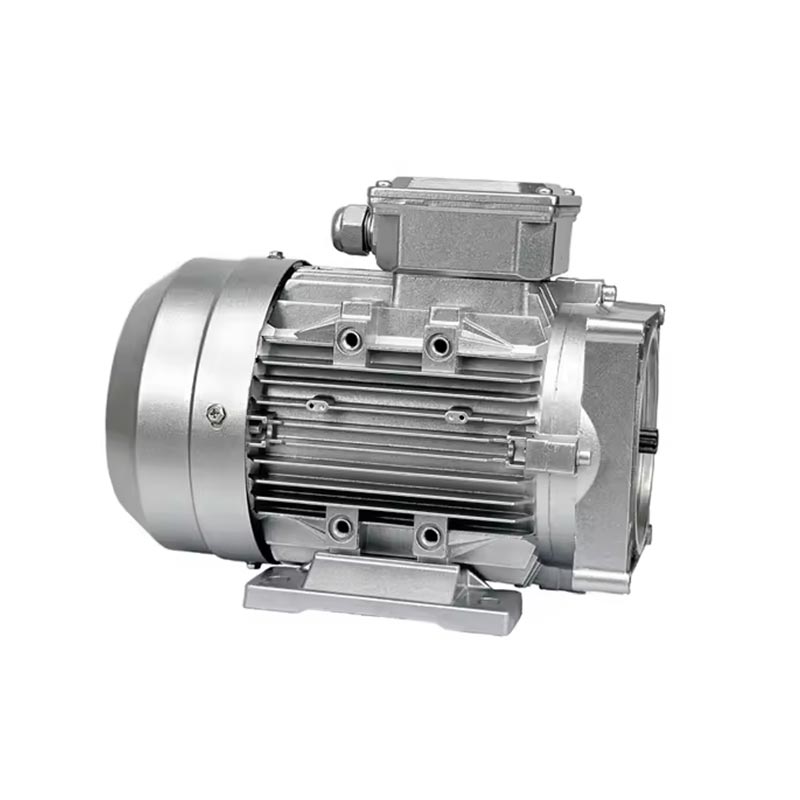
A three-phase asynchronous motor is a common type of motor typically composed of multiple components, each with specific functions and roles that work together to ensure the normal operation of the motor.
Stator Component:
The stator is the stationary part of the motor, consisting of a set of coils (also known as windings) wound around an iron core. The stator generates a rotating magnetic field. When three-phase alternating current flows through the stator windings, it produces a rotating magnetic field within the iron core, which drives the rotating part (rotor).
Rotor Component:
The rotor is the rotating part of the motor, composed of a set of conductors or magnetic materials. Its primary function is to generate a counteracting magnetic force that interacts with the rotating magnetic field produced by the stator. This interaction creates torque, which drives the mechanical load to rotate.
Bearing Component:
Bearings are used to support and position the rotating parts between the rotor and the stator, ensuring the smooth operation of the entire motor system. Common types of bearings include rolling bearings and sliding bearings. Bearings require regular lubrication and maintenance to reduce friction, extend service life, and ensure efficient motor operation.
Cooling Component:
During operation, a three-phase asynchronous motor generates heat. To maintain the motor’s temperature within an acceptable range, a cooling system is typically installed. Common cooling methods include external air cooling and water cooling. The main function of the cooling component is to regulate the motor’s temperature through heat dissipation or fluid circulation, preventing overheating and potential damage.
Control Component:
The control system of the motor generally consists of components such as motor controllers or frequency converters. It is primarily used to control parameters such as motor start-stop, speed, and direction. By adjusting parameters such as voltage and frequency, the controller enables precise motor control to meet various operational requirements.
In summary, a three-phase asynchronous motor can be divided into several key components: the stator, rotor, bearings, cooling system, and control system. Each of these components performs distinct functions and works collaboratively to ensure the normal and efficient operation of the motor.